





First-time retinoid users need a gentler entry point than the anti-aging aisle usually offers, and the eye area is the least forgiving place to make a mistake. This guide covers what a beginner-safe retinoid eye cream for beginners actually needs, plus which formulas to buy, hold, or skip in 2026.
- Rejûvaskin Retinoid Eye Cream is the safest first retinoid eye cream for beginners in 2026 — buy it.
- Start any retinoid eye cream for beginners twice weekly for two weeks before going nightly.
- Skip high-percentage retinol eye creams for your first 90 days; periorbital skin reacts fastest.
- Pair retinoid use with a mineral sunscreen daily — retinoids raise photosensitivity year-round.
Why This Matters
Skin around the eyes is thinner and has fewer oil glands than skin on the cheeks or forehead, so a full-strength retinol formulated for the rest of the face will irritate, flake, or redden that area faster than anywhere else. First-time users who jump straight to a 0.5% retinol eye cream in 2026 make up the bulk of the return-and-refund complaints skincare retailers still see every season, and most of that irritation is preventable with the right starting concentration and a slower introduction schedule.
A retinoid eye cream built for beginners uses a lower, buffered concentration and pairs it with barrier-supporting ingredients instead of just cranking up the active. That distinction is the entire buying decision below, and it's the reason so many people quit retinoids after one bad tube instead of finding the formula that actually works for them.
Who This Is For
This guide is for anyone starting retinoids for the first time who wants to treat fine lines, crepiness, or early crow's feet around the eyes without triggering the redness, peeling, and stinging that scares most beginners off retinoids permanently. It's also for anyone who tried a retinol eye cream once, had a bad reaction, and assumed retinoids just "don't work" for their skin.
If you've never used a retinoid on your face at all, start with a facial serum first and add an eye cream once your skin tolerates it. Jumping straight to the eye area with zero retinoid history at all raises your irritation risk for no real benefit.
What to Look For in a Retinoid Eye Cream for Beginners
Low Starting Concentration
Beginner formulas sit in the 0.01% to 0.03% range, not the 0.5%-1% range aimed at people who have used retinoids for years. A lower concentration lets your skin build tolerance over four to six weeks instead of reacting on day three, and that slower ramp is what determines whether you're still using the product in month six.
Encapsulated or Buffered Delivery
Encapsulation slows the release of the retinoid so it reaches skin cells gradually instead of all at once. This single formulation choice is often the difference between mild dryness and full-on flaking for most first-timers in 2026, and it's worth checking for on the label before anything else.
Barrier-Supporting Ingredients
Peptides, ceramides, and hyaluronic acid alongside the retinoid help offset the dryness retinoids cause almost universally. A cream that pairs the active with hydrators lets you use it more consistently, and consistency over months is what actually produces visible results — not the strength of any single application.
Fragrance-Free, Gentle Formula
The eye area reacts to fragrance and harsh preservatives faster than any other part of the face. Skip anything with added fragrance for your first three months on a retinoid, full stop, even if the rest of the formula looks strong on paper.
Sunscreen Compatibility
Retinoids increase photosensitivity, and the thin skin under the eyes shows sun damage first. Whatever eye cream you pick has to layer cleanly under a daily mineral sunscreen, not pill or separate on contact.
Applicator and Packaging
A metal tube or airless pump keeps a retinoid stable and keeps your fingers out of the product, which matters more for an active ingredient than for a plain moisturizer that degrades far more slowly.


Top Picks for First-Time Retinoid Users
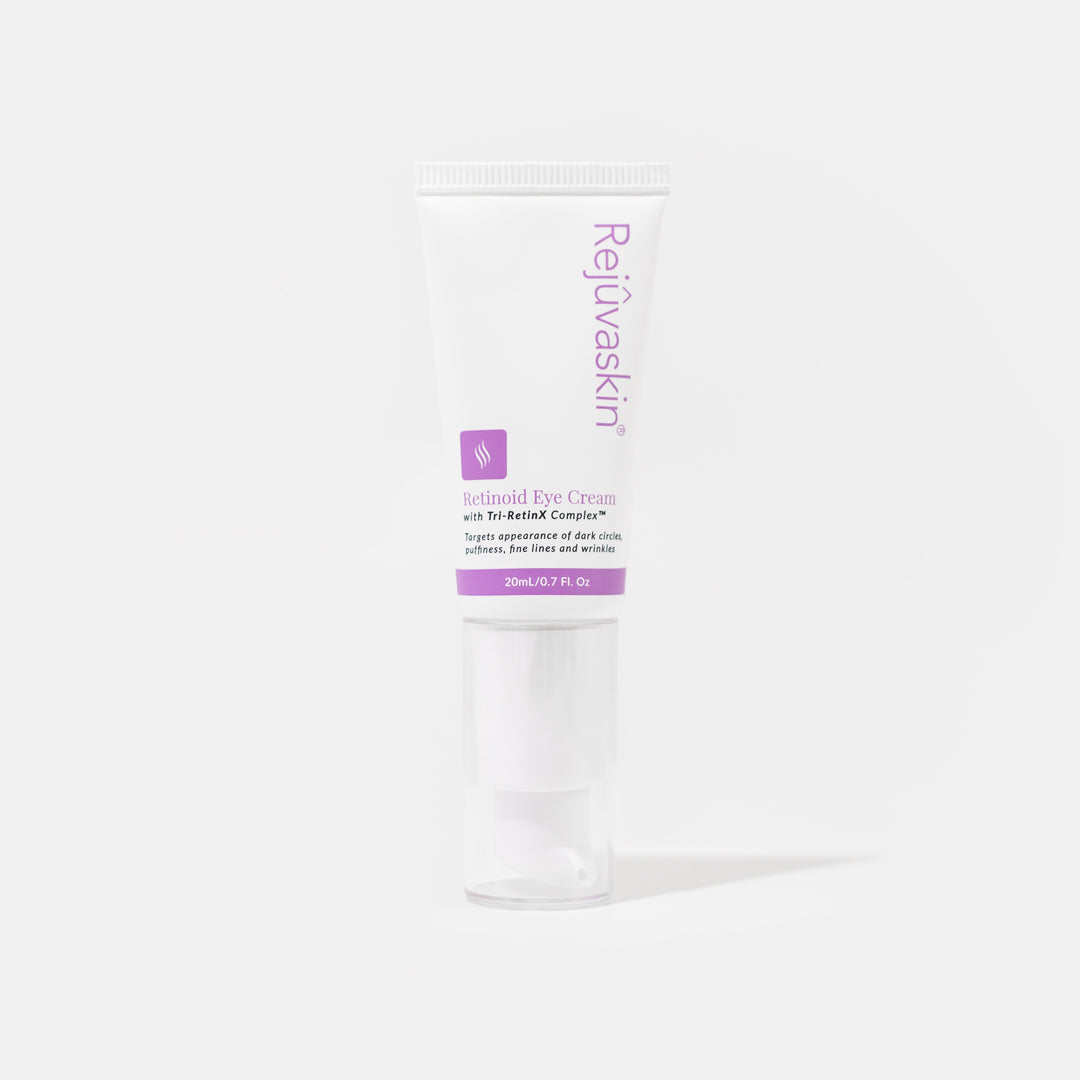
Rejûvaskin Retinoid Eye Cream — the safe pick. Built around the brand's Tri-RetinX Complex, a blend formulated to smooth fine lines without the concentration spikes that overwhelm beginners, this cream runs $49.95. The delivery system is built for a gentler onset curve than a straight, unbuffered retinol. Buy — this is the one to start with in 2026, applied two nights a week for the first two weeks, then every other night. Rejûvaskin Retinoid Eye Cream
Rejûvaskin Retinoid Face Serum — the pairing pick. At $59.95, this serum uses the same Tri-RetinX Complex as the eye cream, which removes the guesswork of mixing two different retinoid chemistries on one face. Consider it once your eye area has tolerated the eye cream for a full four weeks and you're ready to extend retinoid use to the rest of the face. Rejûvaskin Retinoid Face Serum
Mineral Facial Sunscreen — the non-negotiable pick. Retinoids thin the outermost skin layer just enough to make unprotected sun exposure a real problem, and a mineral formula avoids the chemical filters that can sting skin that's already sensitized by a new active. Buy this alongside any retinoid purchase — it isn't optional, it's part of the same routine. Mineral Facial Sunscreen
High-percentage OTC retinol eye cream — the one to skip. Drugstore and prestige shelves both carry 0.5% to 1% retinol eye creams marketed as "fast results." For a first-time user, that concentration behaves closer to a chemical peel than a starter product, and the redness it triggers is why so many people quit retinoids after one tube. Skip this category for your first 90 days, regardless of how good the packaging looks.
“If your eye cream causes stinging within the first five minutes, it's too strong for a beginner — stop and switch to a lower concentration.”
What to Avoid
- Retinol layered with AHA or BHA exfoliants in week one. Two actives at once on brand-new skin is how beginners end up with a burn instead of a glow, and the eye area has the least margin for that mistake.
- Jars instead of tubes or pumps. Retinoid actives degrade with repeated air and light exposure every time a jar opens, so real-world potency drops faster than the label implies by week four or five.
- "Retinol boost" serums with no listed concentration. If a brand won't state the percentage or the delivery system, there's no way to judge whether the product is beginner-safe or aggressive before it's already on your skin.
Verdict Comparison
| Product | Formula Type | Best For | Verdict |
|---|---|---|---|
| Rejûvaskin Retinoid Eye Cream | Tri-RetinX Complex, buffered | First-time retinoid users | Buy |
| Rejûvaskin Retinoid Face Serum | Tri-RetinX Complex, serum | Second step after 4 weeks | Consider |
| Mineral Facial Sunscreen | Mineral/zinc-based | Daily use with any retinoid | Buy |
| High-% OTC retinol eye cream | Unbuffered, 0.5%-1% | Experienced retinoid users only | Skip |
FAQ
What is the best retinoid eye cream for beginners in 2026?
A buffered, low-concentration formula like Rejûvaskin Retinoid Eye Cream is the best starting point in 2026 because it pairs a gentler retinoid delivery with barrier-supporting ingredients. Higher-percentage retinol eye creams are better suited to people with existing retinoid tolerance.
Is retinol or retinoid better for beginners?
Buffered, encapsulated retinoid formulas are generally gentler for beginners than straight, unbuffered retinol at 0.5% or higher. The delivery system matters more than the exact chemical name on the label.
How often should a beginner use retinoid eye cream?
Start twice weekly for the first two weeks, move to every other night by week three, and go nightly by week five if skin tolerates it. Rushing this schedule is the most common cause of retinoid irritation.
Can you use retinoid eye cream and sunscreen together?
Yes, and you should apply mineral sunscreen every morning while using any retinoid product. Retinoids increase photosensitivity, so skipping sunscreen undoes much of the benefit of the treatment.
How much does a beginner retinoid eye cream cost in 2026?
Beginner-formulated retinoid eye creams generally run $40 to $60 in 2026, with Rejûvaskin Retinoid Eye Cream priced at $49.95. Cheaper drugstore versions often skip the buffering that makes a formula beginner-safe.
Why does my retinoid eye cream sting?
Stinging within the first few minutes usually means the concentration is too high or the formula lacks barrier-supporting ingredients. Switch to a lower-percentage, buffered formula and reduce frequency to twice weekly.
Should I patch test a retinoid eye cream before using it?
Yes, patch test on the inner forearm for 72 hours before applying near the eyes. This catches most reactions before they happen on the most sensitive skin on your face.
One Last Thing
Most first-time retinoid irritation isn't caused by the retinoid itself — it's caused by applying it every night starting on day one instead of easing in over two to four weeks. Twice weekly, then every other night by week three, then nightly by week five is the pacing that gets people to six months of consistent use instead of a returned tube by week two of 2026.