






The Power—and Pitfalls—of Active Skincare
Retinoids, vitamin C, and exfoliating acids (AHAs and BHAs) are gold-standard skincare ingredients known to boost collagen, fade dark spots, and smooth texture. But without the right strategy, combining these actives can leave skin irritated, red, and overly dry.
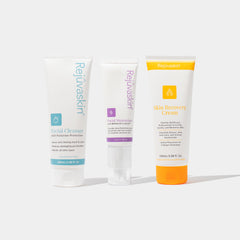
The key is balance — understanding when and how to use actives, and how to protect your skin barrier while doing it. In this guide, we’ll break down the science behind safe layering, show you how to combine actives effectively, and explain how Rejûvaskin’s Skin Recovery Cream can help your skin stay calm, hydrated, and resilient through it all.
1. Retinoids: Proven Power, But Handle with Care
Retinoids (vitamin A derivatives like retinol or retinal) are backed by decades of dermatological research for reducing wrinkles, improving elasticity, and stimulating collagen production (Fisher & Voorhees, 1996).
However, they can also cause irritation and dryness, especially when used too frequently or layered with exfoliating acids. Recent studies show retinol’s dehydrating effect can be mitigated with hydrating ingredients such as polysaccharides or barrier-supportive moisturizers (Gruber et al., 2020).
Use Tips:
-
Apply retinoids at night, as they’re deactivated by sunlight.
-
Start 2–3 times per week and increase gradually.
-
Always follow with a barrier-repair moisturizer like Rejûvaskin Skin Recovery Cream to minimize dryness and flaking.
2. Vitamin C: Morning Protection & Brightening
Vitamin C (ascorbic acid) is an antioxidant powerhouse that protects skin from free radical damage, improves tone, and supports collagen synthesis. Studies show topical vitamin C increases hydration, elasticity, and radiance while reducing wrinkle depth within four weeks of consistent use (Wang et al., 2022).
Use Tips:
-
Apply in the morning, before moisturizer and sunscreen.
-
Do not mix with retinoids or strong acids in the same routine—these can destabilize vitamin C or increase sensitivity.
-
For added protection, pair vitamin C with Rejûvaskin Mineral Facial Sunscreen to shield against UV-induced oxidative stress.
3. AHAs & BHAs: Gentle Exfoliation for Smooth Skin
Alpha hydroxy acids (AHAs) and beta hydroxy acids (BHAs) exfoliate dead cells and unclog pores. They can improve tone and texture but, when combined carelessly with retinoids or vitamin C, may cause redness or stinging.
Dermatology research highlights that exfoliating actives compromise barrier integrity if overused—but alternating with barrier-repair formulas significantly reduces irritation and transepidermal water loss (TEWL) (Draelos et al., 2023).
Use Tips:
-
Introduce slowly, starting once or twice per week.
-
Avoid using on the same night as retinoids.
-
After exfoliating, restore balance with Rejûvaskin Skin Recovery Cream, formulated with calming lipids and hydrating botanicals to strengthen the barrier.
4. How to Layer Actives Safely
Morning Routine (Protect & Prevent):
-
Gentle cleanser
-
Vitamin C serum
-
Hydrating moisturizer
-
Rejûvaskin Mineral Facial Sunscreen
Evening Routine (Renew & Restore):
-
Cleanse skin thoroughly
-
Apply either a retinoid or AHA/BHA (never both)
-
Wait 5–10 minutes
-
Follow with Rejûvaskin Skin Recovery Cream to seal in moisture and reduce post-active irritation.
This layering method allows each ingredient to perform optimally while maintaining hydration and minimizing barrier stress.
5. Managing Irritation: The Science of Barrier Recovery
Even properly layered actives can temporarily weaken the stratum corneum (your skin’s outer barrier), leading to tightness or flaking. According to recent dermatological reviews, skin barrier repair strategies — such as hydration, ceramide replenishment, and lipid support — are essential for reducing irritation and maintaining tolerance to actives (Narsa et al., 2024).
Pro Tip: Apply Rejûvaskin Skin Recovery Cream as a “buffer” between actives to provide a cushion that maintains moisture and calms inflammation without hindering ingredient efficacy.
6. When in Doubt, Listen to Your Skin
Skin health is dynamic — sensitivity can vary based on weather, hormones, or stress. If irritation persists, scale back usage and focus on hydration until comfort returns. Short “skincare fasts” with gentle, barrier-supportive products like Rejûvaskin Skin Recovery Cream can restore balance quickly.
Science-Backed Simplicity for Radiant Skin
Safe layering isn’t about using more products — it’s about using them smarter.
By combining evidence-backed actives thoughtfully and protecting your barrier with calming, hydrating support, you’ll achieve visible improvements in tone, texture, and elasticity — without the irritation.
Healthy skin isn’t rushed — it’s balanced, nourished, and resilient. That’s the Rejûvaskin way.
Works Cited
Draelos, Z. D., Baalbaki, N. H., Colon, G., & Dréno, B. (2023). Ceramide-containing adjunctive skin care for skin barrier restoration during acne vulgaris treatment. Journal of Drugs in Dermatology, 22(6), 554-558. Link
Fisher, G. J., & Voorhees, J. J. (1996). Molecular mechanisms of retinoid actions in skin. FASEB Journal, 10(9), 1002–1013. Link
Gruber, J. V., Stojkoska, V., & Riemer, J. (2020). Retinol has a skin dehydrating effect that can be improved by a mixture of water-soluble polysaccharides. Cosmetics. Link
Narsa, A. C., Suhandi, C., Afidika, J., Ghaliya, S., Elamin, K., & Wathoni, N. (2024). A comprehensive review of the strategies to reduce retinoid-induced skin irritation in topical formulation. Dermatology Research and Practice. Link
Wang, M., Lu, W., Ge, X., Lu, Y., Jia, X., Li, H., & Liu, Q. (2022). Study on the efficacy of vitamin C lotion on skin: Permeable and anti-aging. Journal of Cosmetics, Dermatological Sciences and Applications. Link