






What if the secret to radiant, healthy-looking skin wasn’t just in your skincare routine — but also in your kitchen?
While topical care is essential, emerging research shows that nutrition plays a powerful role in your skin’s clarity, hydration, and glow. From the fats you eat to the sugars you avoid, every choice influences your skin’s natural barrier, inflammation levels, and even its ability to retain moisture.
1. Myth: Greasy Foods Cause Breakouts
It’s a classic belief: “If I eat pizza, my skin will break out.” But science tells us it’s not that simple.
There’s little evidence that eating greasy or oily foods directly increases sebum (skin oil) production — that’s more tied to hormones and genetics than dietary fat from a burger or fries alone. However, diets high in refined fats and sugars together, typical of a “Western diet,” are associated with acne and skin inflammation. For example, large population studies show adults consuming fatty and sugary foods have higher odds of current acne compared to those with healthier eating patterns (Penso et al., 2020).
Truth: Unhealthy high-fat and high-sugar diets can contribute to inflammation and acne risk — especially when they displace nutrient-rich foods.
What to Eat Instead:
– Healthy fats: Omega-3 rich fish, walnuts, chia seeds, and flaxseed support skin barrier function and reduce inflammation. PMC
– Balanced meals: Lean proteins, colorful vegetables, and whole grains help stabilize blood sugar and support skin repair.
2. Myth: Sugar Doesn’t Affect the Skin
When it comes to sugar, the narrative is evolving. Some older blogs dismissed sugar as unrelated to skin health, but more recent evidence points to complex links between high sugar diets and skin inflammation.
High-glycemic diets (those that spike blood sugar quickly) have been linked to increased acne severity and inflammatory markers in clinical studies because they influence hormones like insulin and IGF-1, which can promote oil production and inflammation in skin tissues (Dermatology Advisor, 2018). Dermatology Advisor
Similarly, milk and sugary beverages — especially when consumed regularly — have been associated with higher rates of current acne in adults in large observational research (Penso et al., 2020).
Truth: Sugar and high-glycemic foods can contribute to inflammatory pathways that may worsen acne and dull skin over time.
What to Eat Instead:
– Low-glycemic foods: Beans, lentils, oats, berries, and leafy greens help keep blood sugar steady.
– Natural sweetness: Whole fruits deliver fiber and vitamins without blood sugar spikes.
3. Truth: Hydration Matters (But It’s More Than Just Water)
Hydration isn’t just “drink more water and your skin will glow” — it’s about cell function and barrier integrity. The skin is a protective organ that relies on balanced hydration to retain elasticity, resist irritation, and perform immune signaling. A lack of fluids can make skin look dull, fine lines more visible, and damage harder to repair (Ahmed, 2024).
But water isn’t the whole picture — electrolytes and nutrients like vitamin C and zinc also help maintain hydration and support collagen.
Tip: Pair fluid intake with antioxidant-rich foods (citrus, leafy greens, bell peppers) and minerals (nuts, seeds) that fortify hydration from within.
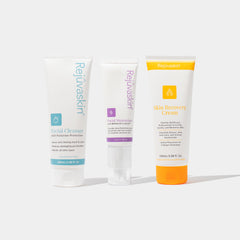
Rejûvaskin’s Hydrating Facial Cleanser with EXO-P and Skin Recovery Cream support surface hydration and barrier repair, enhancing what a healthy diet builds from the inside-out.
4. Truth: Inflammation Is the Bridge Between Diet and Skin Problems
Inflammation is part of normal immune function — but chronic low-grade inflammation, often fueled by diet, can contribute to redness, sensitivity, and aging. Research shows that foods high in trans-fats, refined sugars, and processed carbohydrates promote inflammatory pathways, while diets richer in omega-3s, antioxidants, and phytonutrients (plant compounds) are associated with reduced inflammation and healthier skin outcomes (Ahmed, 2024; Assaf, 2024)
Anti-inflammatory dietary patterns — such as the Mediterranean diet — emphasize whole foods, colorful produce, lean proteins, and healthy fats to modulate the body’s immune response.
What to Eat Instead:
– Wild-caught salmon, sardines, or chia seeds for omega-3s.
– Berries, dark chocolate, nuts, cruciferous vegetables for antioxidants.
– Probiotic foods (yogurt, kefir, kimchi) to support gut health, which is increasingly linked to systemic inflammation and skin health.
Putting It All Together: A Clear-Skin Plate
Here’s how to translate evidence into action:
✔ Balance carbs and protein: steady blood sugar supports reduced inflammation and oil production.
✔ Prioritize healthy fats: nourish the skin barrier and lower inflammation.
✔ Hydrate smartly: water + minerals + antioxidant foods for internal glow.
✔ Limit added sugars and processed foods: to reduce hormonal spikes and skin irritation.
Topical Support That Complements Nutrition
Your nutrition lays the foundation, but topical support matters too — especially when skin is sensitized by diet-related inflammation or dehydration.
Rejûvaskin Hydrating Facial Cleanser with EXO-P — cleans without stripping hydration, so your barrier stays strong.
Rejûvaskin Skin Recovery Cream — soothes irritation and supports barrier repair after environmental or dietary stress.
Rejûvaskin Mineral Facial Sunscreen — protects from UV-induced inflammation and premature aging.
These products pair beautifully with a nutrient-focused lifestyle, helping your skin stay resilient, calm, and radiant.
Eat for Glow, Not Guilt
Myths about diet and skin are everywhere, but the truth — based on science — is clear:
You can’t “spot-treat” your skin with food alone, but you can support your skin’s biology with balanced nutrition that reduces inflammation, stabilizes blood sugar, and nurtures hydration.
Combine this with gentle, non-irritating topical care (like Rejûvaskin’s formulations), and you’re building a foundation for healthy, radiant skin year-round.
Works Cited
Ahmed, I. A. (2024). Diet and skin health: The good and the bad. Journal of Dermatological Science. Link
Assaf, S. (2024). Nutritional dermatology: Optimizing dietary choices for skin. PMC. Link PMC
Penso, L., et al. (2020). Association between adult acne and dietary behaviors. JAMA Dermatology. Link JAMA Network