






Eczema (atopic dermatitis) doesn’t follow a one-size-fits-all path. Some people outgrow it, while others develop flare-ups later in life or experience worsening symptoms. Research shows that age-related changes in skin structure, immune function, and barrier lipids influence how eczema behaves — but with the right care, you can support your skin at every stage.
How Aging Influences Eczema — A Stage-by-Stage Look
Childhood & Adolescence
-
Many children see remission as they grow, but genetic factors — like filaggrin (FLG) mutations — can predispose them to persistent eczema into adulthood (Brown et al., 2019).
-
Early barrier impairment increases sensitivity to allergens and irritants, which can continue without proper intervention.
Adulthood
-
In adults, eczema may persist or develop for the first time due to immune imbalance and environmental triggers (Langan et al., 2020).
-
Aging skin naturally loses ceramides, cholesterol, and free fatty acids, reducing its ability to retain moisture (Boiten et al., 2018).
Later Years (Seniors)
-
Elderly skin has a thinner epidermis, reduced sebaceous activity, and a slower turnover rate, making it more vulnerable to asteatotic eczema and inflammation (Tanei, 2020).
-
Increased transepidermal water loss (TEWL) in older adults contributes to dryness and itchiness, common eczema flare triggers.
Skincare Strategies That Grow with You
For Kids & Teens
-
Daily moisturizing with barrier-repair creams can reduce flare frequency and severity (Simpson et al., 2014).
-
Choose fragrance-free, low-irritant formulas to minimize sensitization risk.
For Adults
-
Avoid hot water and harsh soaps — both accelerate lipid loss.
-
Use ceramide-rich emollients to restore the skin’s barrier function.
For Seniors
-
Apply thicker creams or ointments twice daily to combat age-related TEWL.
-
Pair moisturizers with a humidifier to maintain indoor humidity between 30–50%.
How Rejûvaskin Supports Skin Health at Any Age
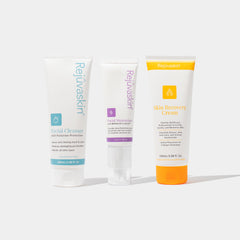
Rejûvaskin’s Skin Recovery Cream is formulated with barrier-supportive lipids, ceramides, and botanical antioxidants. Its gentle, fragrance-free formula is suitable for eczema-prone skin at all ages, from children to seniors. It helps:
-
Replenish lost barrier lipids
-
Lock in hydration
-
Support skin recovery without irritation
Eczema doesn’t automatically get worse with age — but the way your skin responds to triggers changes over time. By understanding age-specific needs and using evidence-backed barrier-supportive products, you can keep eczema under control through every stage of life.
Works Cited
-
Boiten, W. A., Absalah, S., Vreeken, R. J., Bouwstra, J. A., & van Smeden, J. (2018). Quantitative analysis of ceramides using a novel lipidomics approach with three-dimensional mass spectrometry. Journal of Lipid Research, 59(1), 219–228. Link
-
Brown, S. J., Kroboth, K., Sandilands, A., Campbell, L. E., Pohler, E., Kezic, S., ... & McLean, W. H. (2019). Intragenic copy number variation within filaggrin contributes to the risk of atopic dermatitis with a dose-dependent effect. Journal of Investigative Dermatology, 139(7), 1592–1599. Link
-
Langan, S. M., Irvine, A. D., & Weidinger, S. (2020). Atopic dermatitis. The Lancet, 396(10247), 345–360. Link
-
Simpson, E. L., Chalmers, J. R., Hanifin, J. M., Thomas, K. S., Cork, M. J., McLean, W. H., ... & Williams, H. C. (2014). Emollient enhancement of the skin barrier from birth offers effective atopic dermatitis prevention. Journal of Allergy and Clinical Immunology, 134(4), 818–823. Link
-
Tanei, R. (2020). Atopic dermatitis in older adults: A review of treatment options. Drugs & Aging, 37(6), 399–407. Link
Leave a comment